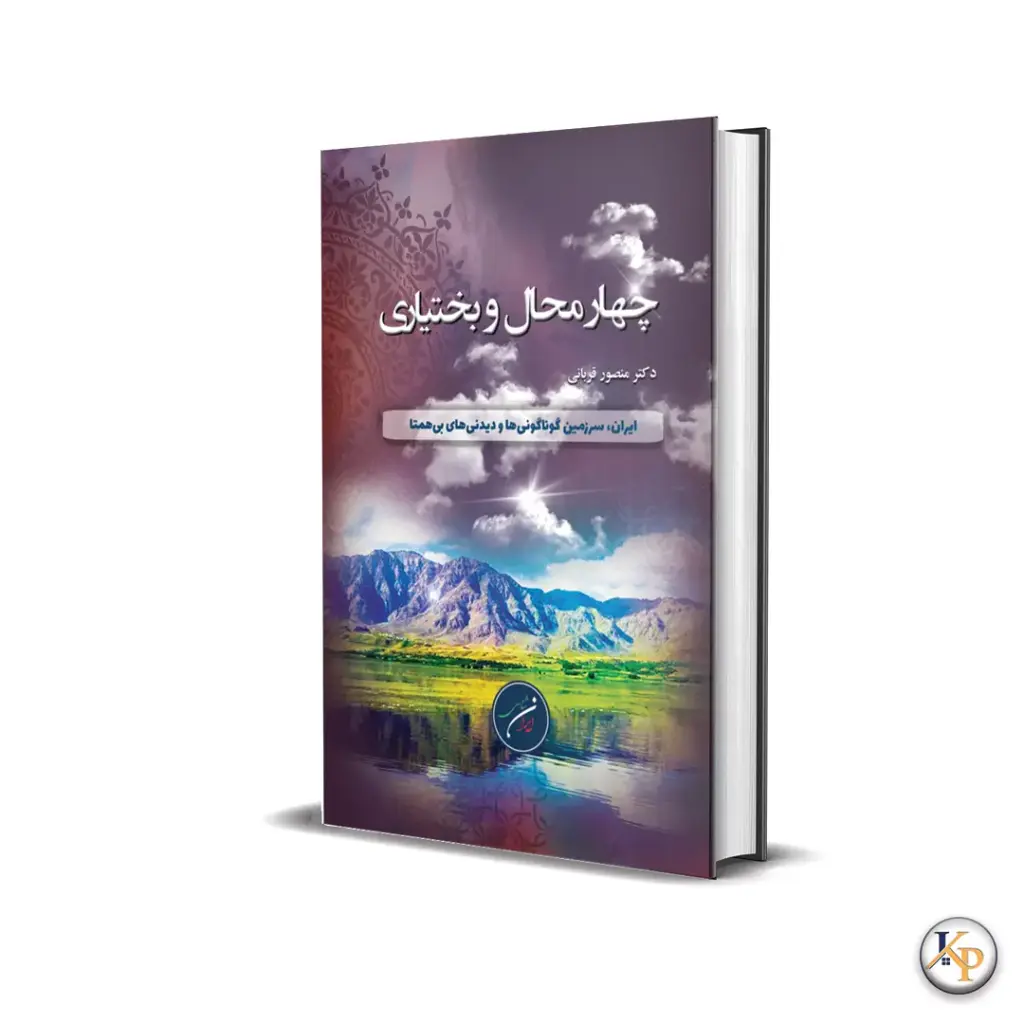
استان چهارمحال و بختیاری
دکتر منصور قربانی
Professionally published books with global distribution, premium design, and international availability across major bookstores and online retailers.














Product details
- Publisher: Kidsocado
- Publication date: 3 February 2026
- Language: Persian
- Print length: 168 pages
- ISBN-10: 1778920632
- ISBN-13: 978-1778920639
- Item Weight: 476 g
- Dimensions: 15.24 x 1.6 x 22.86 cm
- Country of Origin: Canada
Chaharmahal and Bakhtiari Province is located in southwestern Iran and borders two major and historically important provinces: Isfahan and Khuzestan. It is considered the most mountainous province in the country, and for this reason, it is also one of Iran’s largest sources of fresh water.
The province offers remarkable natural landscapes, including waterfalls, wetlands, rivers, towering mountains, and the beautiful Zagros forests. Its winding scenic roads and deep valleys such as the Mashayekh Valley, the Kohrang Valley, and the Bazoft Valley are among the most striking in Iran and have few parallels elsewhere in the country.
Because of its pristine nature and its rich variety of plant and animal species, the province is an ideal region for beekeeping and high-quality honey production. Chaharmahal and Bakhtiari is also home to vast plains covered with diverse vegetation, including the famous inverted tulips that bloom in the area.
Culturally, the province is divided into two regions: Chaharmahal and Bakhtiari. The Bakhtiari people primarily inhabit the southern part of the province. They are among the oldest Iranian tribes and have played an influential role in shaping Iranian history from the Achaemenid era to the Constitutional Revolution. A significant portion of the Achaemenid soldiers were ancestors of the Bakhtiari people, and they were actively involved in Nader Shah’s military campaigns as well. The Constitutional Revolution was preserved in large part through the intervention of Bakhtiari leaders, including the conquest of Tehran under the command of Sardar Asad.
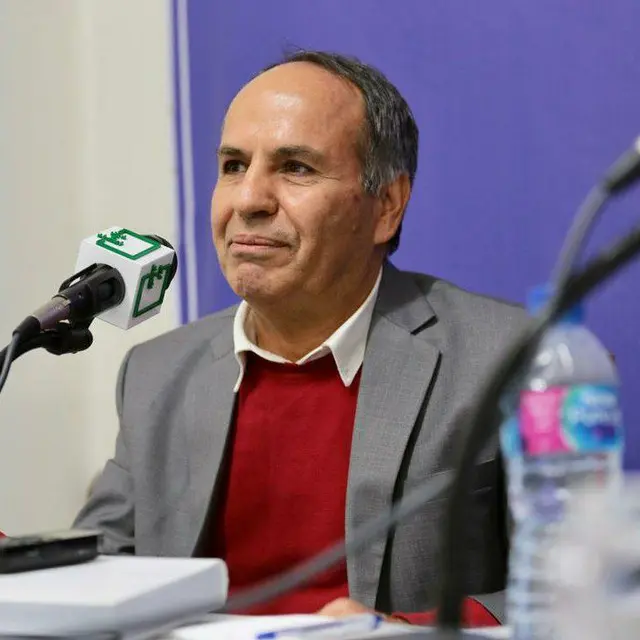
Mansoor Ghorbani
Born in Ordibehesht 1340 (May 1961) in the village of Nanj, Malayer, Mansour Ghorbani completed his early education in Malayer and earned his bachelor’s degree in Geology from Shahid Beheshti University in 1988. He later became the first graduate of the university’s master’s program in Geology (1991) and received his PhD in Petrology and Metallogeny in 1999. Since that year, he has been a faculty member at Shahid Beheshti University, where he currently holds the rank of Full Professor and has taught at undergraduate, master’s, and doctoral levels. He has supervised more than one hundred graduate theses and has been recognized as an outstanding university researcher.
Dr. Ghorbani has conducted extensive scientific and field research across Iran in earth sciences, physical geography, and ethnography. His scholarly output includes over 50 academic works—among them books (including three published by Springer), maps, atlases—and more than 150 national and international articles. He has also served as scientific and executive secretary for several national and international conferences.
His long-term field studies, combined with a deep interest in Iranian history, culture, and natural resources, have shaped his integrated approach to Iranology, encompassing nature, history, culture, and geography. His earlier research was published in a 10-volume Iranology series, and the present work serves as the introduction to a new 33-volume Iranology collection with a renewed perspective.