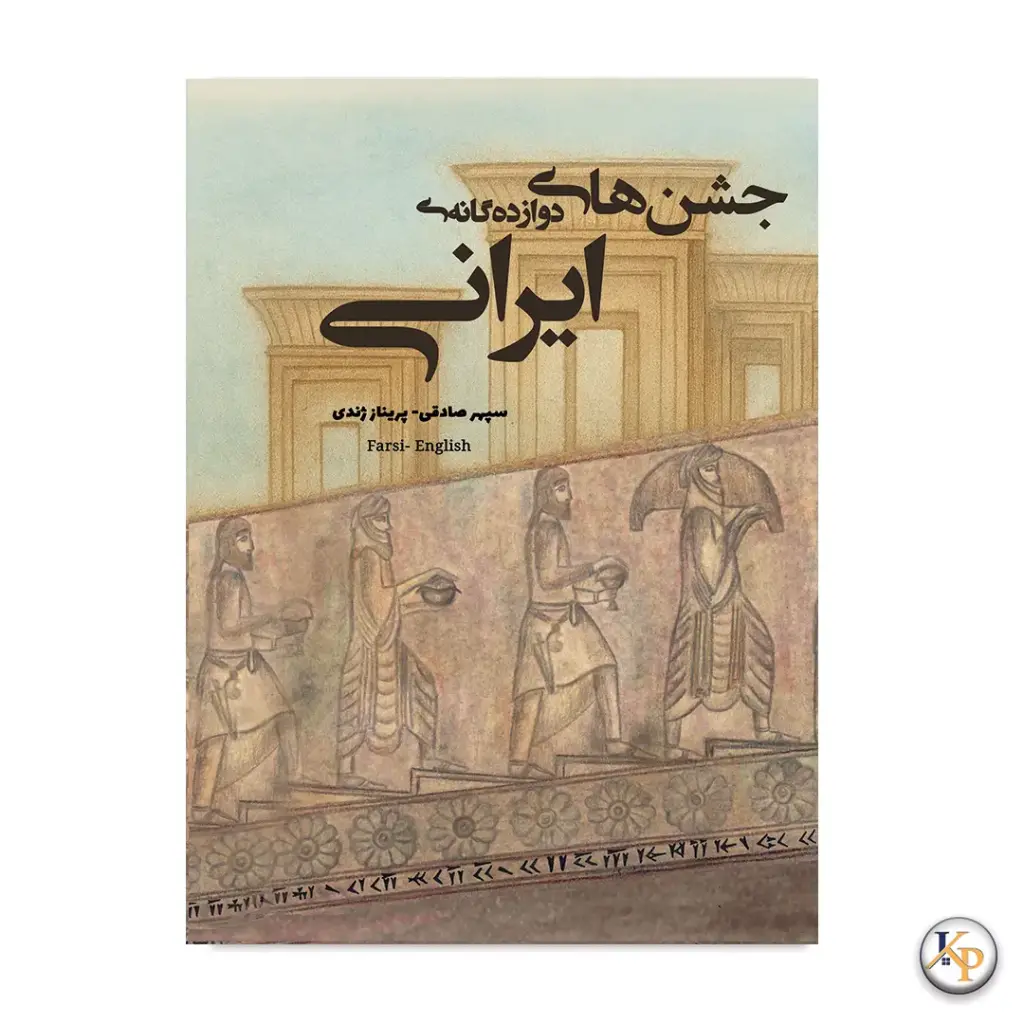
جشنهای دوازدهگانهی ایرانی
Pre-sale is now open.
By placing your order today, your name will be added to the priority list, and you will receive your copy immediately upon the official release.
Sepehr Sadeghi
Parinaz Zhandy
Hard Cover / Bilingual English - Farsi
This content will be shared across all product pages.
- Publisher: Kidsocado
- Publication date: February 1, 2026
- Language: Farsi- English
- Print length: 68 pages
- ISBN-13: 978-1-77892-312-8
- Dimensions : 6.69 x 0.42 x 9.61 inches
Product details
“The Twelve Iranian Festivals” offers a clear and heartfelt bridge between the ancient heritage of Iran and the curiosity of today’s young readers. This bilingual book introduces the meaning, beauty, and philosophy of each festival based on reliable historical and cultural sources. Created through a shared passion for Iranian culture by Parinaz Zhandi and Sepehr Sadeghi, and brought to life with the vibrant illustrations of Hanieh Tam, this work invites readers to feel a deeper sense of connection and pride in the timeless traditions of Iran. We hope this book becomes a small yet radiant light for families around the world—strengthening their sense of identity, belonging, and pride in the timeless culture of Iran.
In one full year, we have 12 months with different Persian names which share their name with one day in a month. For example: Farvardin is the first month of the Persian calendar and at the same time the 19th of the month is also called Farivardin. The day when the name of a month and the name of the day are the same, ancient Persians would celebrate that day for joy and bringing others closer together. The purpose of this ceremony was to bring people in the community closer together, to create harmony, and to gather their energy for greater cooperation. In these festivals, people relieved the fatigue of their mind and body through satisfaction, games, dancing, and lighting fires, and they became energized again to be ready for the work of the following days.We belive that the beautiful tradition of ancient persian should not only be introduced and resurfaced among the current persian speaking people of the world right now, but also among the people of all nations. Each of these cultural customs was held for special humanitarian reasons, with the main focus being on living nature and its elements such as water, earth, and fire. In today’s world, the absence of some of these celebrations is deeply felt.

About the Author
Sepehr Sadeghi:
Time passes so quietly beside us. That very first moment still beats softly in a corner of my memory, the day a calm, polite ten-year-old boy walked into my classroom, a boy whose eyes were filled with energy and hope. A boy who loved soccer, and despite all the beauties and distractions of childhood, was determined not to forget the language and culture of his homeland.
Sepehr, born in Iran, had completed Grade one Persian before immigrating. At the age of ten, he began continuing his Persian studies with me here in Canada. From the very first days of class, there was a spark in his eyes, a spark that told me this child was not simply learning a language; he was searching for roots, for connections that would keep his heart warm.
Years passed, and now in Grade 8 Persian, nine years after our first meeting, that small child has grown into a thoughtful, hardworking teenager deeply interested in Iranian culture and traditions. Sometimes I ask myself what happened in our classes that every page we read together, every sentence he wrote, every discussion about Iran, its history, and its celebrations, became an invisible thread tying him even more strongly to his Aryan heritage.
In Grade 8 Persian, for yet another year, my dear Sepehr hosted the school’s ceremonies. After his successful presentation at the Mehregan celebration, I suggested he explore the book “The Twelve Aryan Festivals.” That suggestion became the beginning of a brand-new path. He accepted with excitement, and we spent hours together reading, comparing, researching, writing, and translating. He absorbed every topic with care and discussed each one with enthusiasm. This book was not just literature for him; it became a bridge to a deeper understanding of the heritage he truly wished to know.
Sepehr is always diligent and full of energy. And he shines not only in academics and culture, he is a teenager who loves soccer, and years of dedication in that path have brought him remarkable success. He has twice become the champion of British Columbia, an extraordinary achievement for any young athlete, and for a teacher like me, a clear sign of his persistence and determination in everything he commits to.
Today, when I look back at the years behind us, a deep sense of joy and satisfaction fills my heart. Sepehr is not just one of my students; he is a dear and genuine friend. I have witnessed his growth in Persian language and literature step by step. Now, it feels as though time slips through my fingers. Working with him has reminded me every day that being a Persian language and literature teacher means delighting in the blossoming of a new generation passionate about the culture and poetry of their homeland.
Parinaz Zhandy/ November 18, 2025

About the Author
Parinaz Zhendy is a creative and dedicated educator in the sphere of Persian language and culture—an insightful and wise figure who, for many years, has kept the flame of the mother tongue alight with heart and soul, paving the path of cultural elevation for Iran in foreign lands. She is the founder of the cultural-literary center ”Be Sooye Ayandeh” in Vancouver, Canada. Her teaching method is a unique blend of literary knowledge and artistic vision, deeply rooted in the authentic Iranian cultural heritage. Parinaz Zhendy is also a poet, writer, and social activist—a committed human being who has advocated for the preservation of the Persian language and the rights of Iranian women in international forums. As a Persian language and literature expert, she sees her mission as expanding the frontiers of the mother tongue across the globe.
Among her proudest achievements is the authorship of the first bilingual Persian alphabet book for children using English as a supportive medium. This bestselling work, published by Kidsocado Publishing House in collaboration with Setareh Setayesh, has been warmly received on Amazon. She is not just a language teacher, but a messenger of love for culture, poetry, and Iranian identity—a beacon of light who has turned words into guiding lanterns, so that children of yesterday and today, from any corner of the world, may carry a trace of Iran in their hearts.